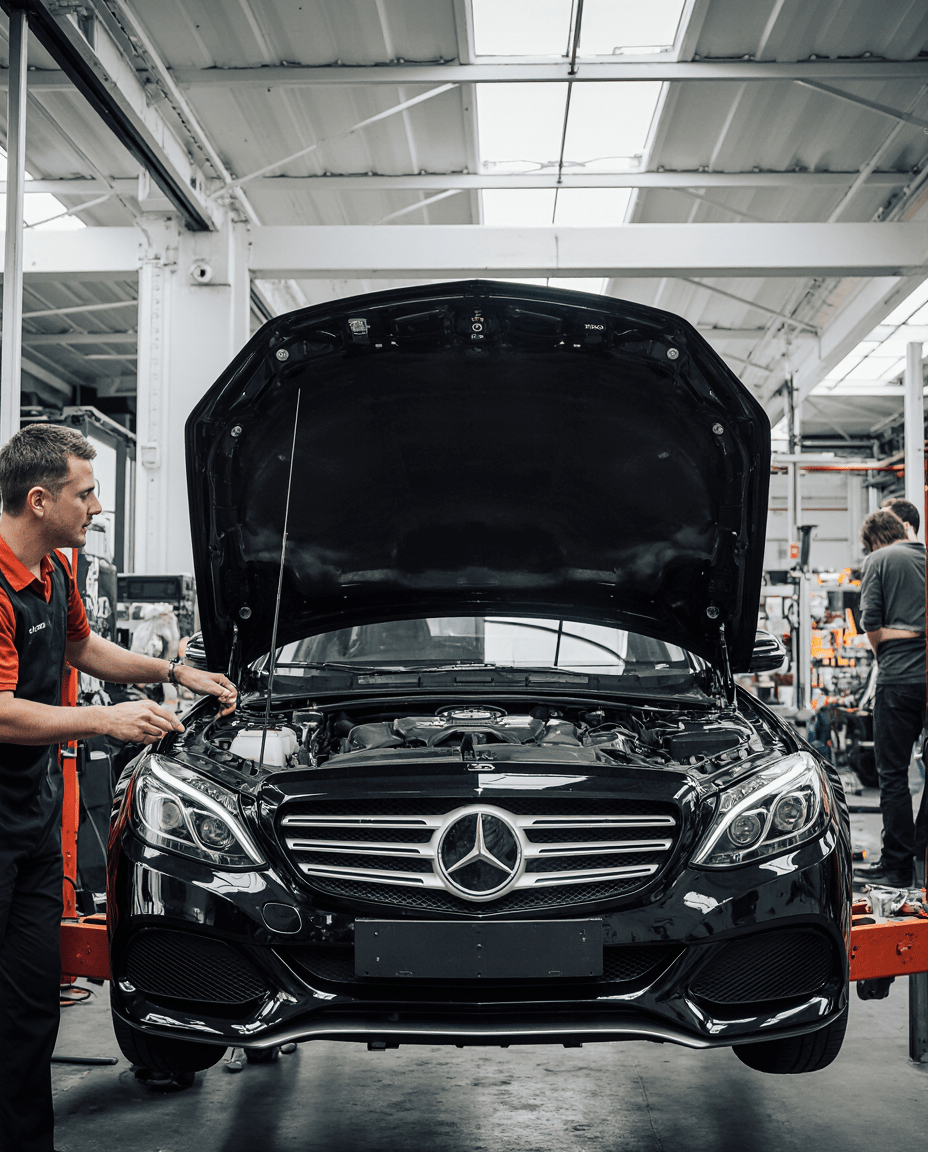
Discover how to save on car care with preventative maintenance and the right replacement parts. Simple routines that extend the life of your vehicle and prevent costly repairs.
A car isn't just a means of transportation: for many families, it's a work tool, a weekend escape, and, in some cases, one of their most significant investments. Maintaining it shouldn't be a luxury, but a smart and necessary routine, like brushing your teeth. However, there are still drivers who only take their car to the mechanic when it's already broken down. And that's where the problems (and expenses) begin.
Preventive maintenance and choosing the right replacement parts, whether original or quality equivalents, are essential for your car to last longer, perform better, and not surprise you with exorbitant bills.
1. Preventive maintenance: the invisible insurance
Unlike mandatory insurance, no one legally requires you to perform preventative maintenance beyond the vehicle inspection (ITV). However, according to industry studies and workshop associations , between 40% and 50% of serious breakdowns that end up in workshops could have been avoided with regular servicing.
What is preventive maintenance?
-
Check fluids: oil, coolant, brake fluid, and windshield washer fluid.
A drop in levels can turn into a breakdown costing thousands of euros.

- Tires: Check pressure and tread wear. Driving with worn tires triples the risk of an accident.
- Filters (air, oil and fuel): replacing them on time keeps the engine "breathing" and reduces consumption.
- Battery: In extreme climates (heat waves or cold spells) it is advisable to check it every 2-3 years.
A clear example: changing the oil and filter in a small car can cost around €90, but ignoring it can lead to an engine breakdown costing more than €3,000.
2. Original vs. alternative spare parts: which to choose?
This raises the big question: is it always worth paying for original (OEM) parts or are quality alternative (aftermarket) parts sufficient?
- Original Equipment Manufacturer (OEM) spare parts :
These are manufactured by the same supplier as the brand. They guarantee a perfect fit and maximum durability. Ideal for new or high-end cars, where resale value is also important.
- Alternative (aftermarket) spare parts :
Manufactured by third parties, they are usually cheaper and, in many cases, meet the same quality standards as OEM parts. They are perfect for cars over 8-10 years old, where cost savings are a priority.
Real example in Spain:
- OEM brake pad set for a compact car : ~€140
- Approved quality equivalent : ~€85.
The difference may seem small, but multiplied by several interventions per year, it represents a considerable saving without losing safety.
3. Success stories: when prevention really saves money
🔧 Case 1 – The Madrid taxi that exceeded 600,000 km.
A taxi driver in Madrid shared on specialized forums how he achieved this mileage without engine failure. His secret: oil changes every 15,000 km with recommended lubricants and quality filters, even aftermarket ones. The result: less time in the garage, more time on the road earning money.
🔧 Case 2 – The family SUV in Valencia.
One owner replaced his shock absorbers with certified aftermarket parts instead of the originals, saving 35%. After 60,000 km, he says the vehicle's handling remains optimal.
These examples confirm that cheap doesn't always end up being expensive , as long as you choose suitable and approved replacement parts.
4. The importance of climatic conditions.
Heat waves, DANA storms, and other severe weather events are testing the resilience of cars. Preventive maintenance is also adapting to this reality.
- During periods of heavy rain : check windshield wipers, tires and headlights to avoid losing visibility.
- In extreme heat : keep an eye on the coolant and battery, as they suffer more than usual.
- In snowy areas : winter tires or chains, plus antifreeze.
Each season is an opportunity to check your car before the weather forces you to.
5. The role of the vehicle inspection station as an ally (and not an enemy)
In Spain, the vehicle inspection (ITV) is often seen as a nuisance. However, it's also a maintenance reminder . One in five failed inspections in 2024 was due to faulty lights and signals—something as simple as changing a bulb on time.
If you use quality replacement parts and keep up with your vehicle's maintenance, passing the MOT test will no longer be a nightmare. And if you make modifications or add accessories, remember that many must be approved to avoid fines and, most importantly, to ensure safe driving.
6. The economic impact: spend less, last longer
The numbers:
- The average annual expenditure on maintenance in Spain is around €719 per family (INE, 2025).
- A clutch failure can cost over €1,200 .
- Changing the timing belt on time (€400-€600) prevents engine breakdowns that multiply the bill tenfold.
Investing in prevention and appropriate replacement parts is like a long-term savings plan: it protects your finances and your car.
7. Practical checklist: habits that make a difference
✅ Check fluid levels once a month.
✅ Check your tire pressure every two weeks.
✅ Change your windshield wipers at the beginning of each rainy season.
✅ Carry an emergency kit (vest, triangles, first aid kit and flashlight).
✅ Use approved replacement parts and compare prices between OEM and alternative parts.
✅ Take advantage of official inspections and vehicle inspections as diagnostic opportunities.
Make your car an ally, not a burden.
A DANA storm can surprise you at any point on any road, but it shouldn't catch you off guard. Preparation doesn't make you immune to the force of nature, but it does make the difference between being the protagonist of your own survival story or being trapped by circumstances.
The elements are out of your control, but the condition of your vehicle is. The next time you see clouds gathering on the horizon and weather alerts flooding your phone, the question shouldn't be "Is it going to rain?" but rather "Is my car ready to navigate these puddles and come out unscathed?"
Because in the end, in those moments when nature reminds us who's boss, the only thing standing between you and chaos is a set of well-chosen, carefully maintained spare parts, ready to prove that human engineering can, at least for a while, stand up to the unleashed elements.