The year 2026 brings significant changes for all Spanish drivers, regardless of the type of car they own. These aren't just abstract new regulations: they are changes that directly affect your wallet, where you can drive, and how you need to equip your vehicle.
If you already own a car, here are the new things you should know to avoid fines, restrictions, or unexpected expenses.
Low Emission Zones: where and who they affect in 2026
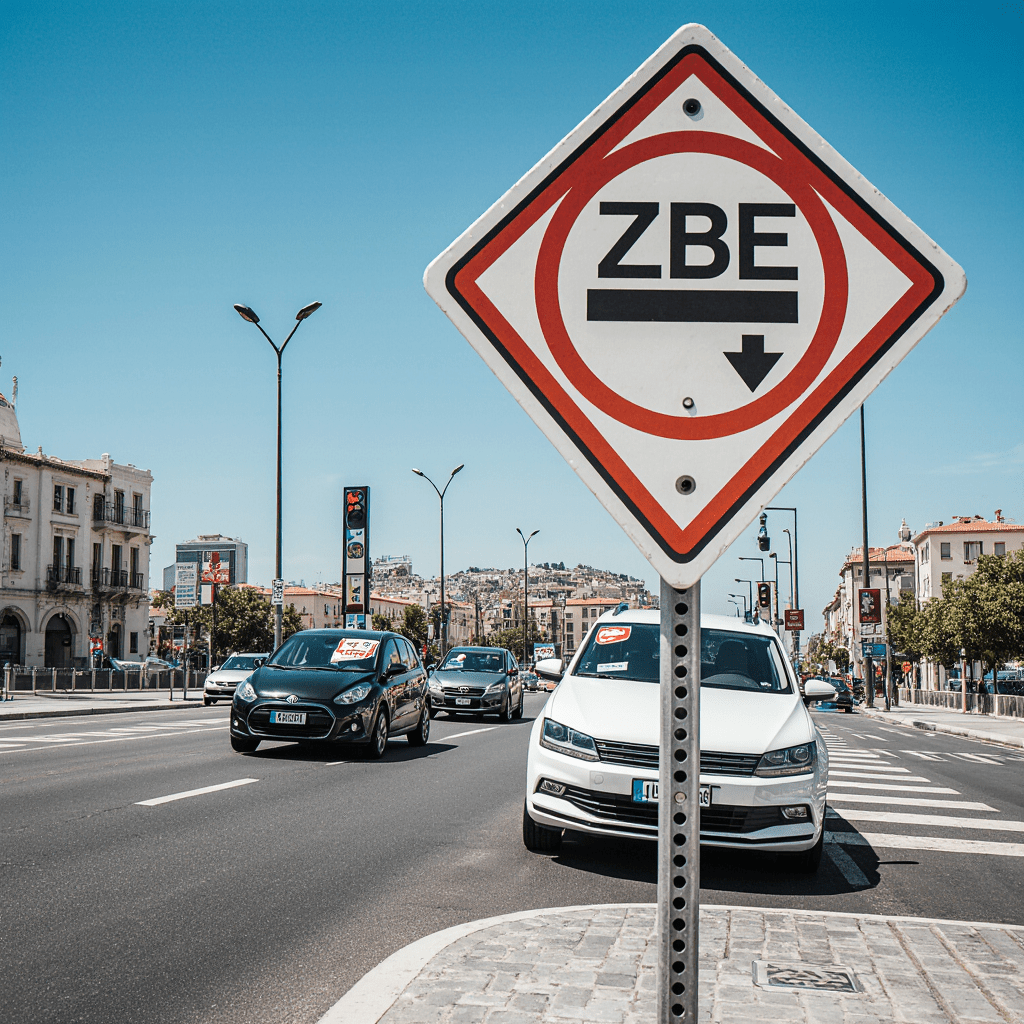
Low Emission Zones (LEZs) are no longer exclusive to Madrid or Barcelona. By 2026, more than 149 Spanish municipalities with over 50,000 inhabitants will be required to have them operational, and many have already begun issuing fines.
Municipalities required to comply and extensions
The Climate Change Law established that all municipalities with more than 50,000 inhabitants should have a Low Emission Zone (LEZ) before 2023. The reality is that many were late, but in 2026 the outlook changes radically.
Cities that already have an operational Low Emission Zone:
- Madrid (the entire city is a Low Emission Zone from January 2025)
- Barcelona (Barcelona Ring Roads)
- Valencia, Seville, Bilbao, San Sebastián
- Málaga, Zaragoza, León, Santiago de Compostela
- Cadiz, Granada, Palma de Mallorca
- Multiple municipalities in the metropolitan area of Barcelona and Madrid
What changes in 2026:
- Zaragoza will begin issuing sanctions from 2026 onwards.
- Chiclana de la Frontera will begin issuing fines from January 2026
- Salamanca will apply restrictions until 2029
- Municipalities with more than 20,000 inhabitants that exceed pollution limits will also have to implement Low Emission Zones (LEZs).
Important: Even if your city does not have 50,000 inhabitants, if you work, visit or travel through cities with a Low Emission Zone , the restrictions still apply to you.
What happens if your car doesn't have a sticker?
Vehicles without an environmental label (class A) are the most affected:
Vehicles without a sticker:
- Gasoline manufactured before the year 2000
- Diesel engines manufactured before 2006
Restrictions in Madrid (from January 2025):
- Vehicles without a sticker are prohibited from circulating throughout the municipality.
- Exception until December 2026: passenger cars without a sticker registered in Madrid and registered for the IVTM will receive informational notices, but not fines.
- Fine: 200 euros for driving in a Low Emission Zone without authorization
Restrictions in Barcelona:
- Access prohibited on weekdays from 7:00 a.m. to 8:00 p.m.
- From 2026, restrictions will be tightened for B labels during pollution episodes
- In 2028, a permanent ban on B-label diesel.
Restrictions in other cities:
- Valencia: fines only for vehicles without a sticker not registered in the province (200 euros)
- Malaga: from December 2024, active penalty regime against vehicles without a sticker not registered in Malaga
- León: fines of up to 500 euros depending on the severity of the infraction
General exceptions:
- Vehicles for people with reduced mobility (TEPMR)
- Approved historic vehicles
- Emergency vehicles and essential services
How it affects you in practice
Beyond the fines, having a car without a sticker or with a B sticker means:
- Work limitations: If you work in a city with a Low Emission Zone (LEZ) and cannot access it, you will have to change your vehicle or find alternative transportation options.
- Accelerated depreciation: Cars without access to cities lose market value rapidly
- Parking costs: Many cities already charge more for parking depending on the environmental label.
V16 beacon: goodbye to emergency triangles.

From January 1, 2026, emergency triangles will no longer be required under Spanish regulations. Only the connected V16 beacon will be valid.
Since when is it mandatory?
Important dates:
- Until December 31, 2025: You can use triangles or V16 beacons (with or without a connection)
- From 1 January 2026: Only the approved connected V16 beacon is valid
What does "connected" mean? The beacon must have IoT connectivity and automatically transmit its location to the DGT 3.0 platform. V16 beacons without connectivity (purchased before 2023) will no longer be valid.
Fine: 80 euros for not having the V16 beacon connected or for using triangles after January 1, 2026.
Why the change? Every year, around 25 people are killed by vehicles while placing warning triangles on the road. The new beacon eliminates the need to leave the vehicle.
How to choose an approved connected beacon
Mandatory requirements:
- Official IDIADA or LCOE certification
- IoT connectivity badge on packaging
- Visible homologation number
- High-intensity LED lighting with 360º visibility
- Waterproof magnetic base
- Battery with a minimum lifespan of 18 months
- Automatic connectivity with DGT 3.0
Where to check if a beacon is valid:
- Check the official list on the DGT website before buying
- Estimated price: between 30 and 50 euros
- It requires no additional fees or costs (the SIM is included and paid for for at least 12 years)
Important: The OCU warns that many beacons purchased months ago may not be valid if they lack connectivity. Check that your model appears on the official DGT list.
Where to put it: In the glove compartment or an easily accessible place (not in the trunk). In case of a breakdown, it can be placed on the roof of the vehicle without needing to get out.
Special cases:
- Motorcycles: also mandatory, although placement is more flexible
- Foreign vehicles in Spain: may use warning triangles if they are on an international route
- Spaniards abroad: the V16 beacon is valid in countries that are signatories to the Vienna Convention (86 countries), but some, such as France and Portugal, still require warning triangles.
Taxes and insurance: why the environmental label is becoming increasingly important
Your car's sticker no longer just determines where you can drive. Now it also affects how much you pay.
Example of Madrid linking road tax to sticker
Madrid is a pioneer in Spain in changing the calculation of the Vehicle Tax (IVTM) according to the environmental label, not the fiscal horsepower.
How the new system works (from 2026):
- The tax is calculated according to the DGT sticker (Zero, Eco, C, B or no sticker)
- Zero and Eco labels: bonuses and reduced rates
- Label C: moderate impact, intermediate rates
- Label B: significant tax increase
- Without a label: larger increase in IVTM (vehicle tax)
Special bonuses:
- Large fleets with Zero, Eco or C vehicles: 50% discount if they progressively renew their vehicle fleet
- Plug-in hybrids: variable bonuses depending on electric range (threshold at 40 km)
What this means in practice: Although the Madrid City Council hasn't published exact figures, cars with a B sticker are expected to be the most affected. The trend is clear: in a few years, maintaining a car with a B sticker will cost more than buying a used hybrid or electric vehicle.
Will it spread to other cities? Madrid is the first, but the model could be replicated in other Spanish capitals in the coming years.
Environmental label and insurance
Although there is no regulation that obliges insurers to differentiate prices by environmental label, in practice it is already happening:
Advantages for eco-friendly cars:
- Specialized insurance with specific coverage for electric and hybrid vehicles
- Bonuses for having a Zero or Eco label
- Replacement vehicle with eco-label in case of breakdown
- Special assistance for battery discharge
- Home charger coverage
Disadvantages for cars without a sticker or with a B sticker:
- Lower residual value (affects comprehensive policies)
- Less interest from insurers in offering discounts
- Traffic restrictions that may cause issues with the policy
The real value of your car in 2026
The environmental label directly affects the resale value:
- Cars without a sticker: accelerated depreciation, especially in large cities
- Label B: value progressively decreasing as restrictions tighten
- Label C: stable for now, but with uncertainty in the medium term
- Eco and Zero Emissions Labels: Better Market Value and Growing Demand
Practical tip: If you have comprehensive insurance, check that the insured value reflects the current market value. A car without a sticker is worth less in 2026 than it was two years ago.
Planned changes in environmental labels (2027)
Although it does not directly affect 2026, the DGT has announced that in 2027 the conditions for obtaining Eco and Zero emissions labels will be stricter:
Expected changes:
- Elimination of advantages for microhybrids (MHEVs)
- Restrictions for plug-in hybrids with lower electric range
- Use of WLTP measurements (more realistic) instead of NEDC
This means that some cars that currently have an Eco label could lose it or be downgraded.
Why these changes affect your car, not just new ones
The common mistake is thinking that these changes only matter if you're buying a new car. The reality is different:
If you have a car without a sticker or with a B sticker:
- You can no longer drive in many cities
- You'll pay more taxes in Madrid (and possibly in other cities soon)
- Your car's value depreciates faster
- You'll have fewer parking options or it will be more expensive.
If you have a car with a C sticker:
- For now, you're relatively calm.
- But the restrictions will be gradually tightened.
- In Barcelona, B labels already have gradual restrictions until 2028
If you have an Eco or Zero emissions car:
- You have tax and mobility advantages
- But pay attention to the 2027 changes in allocation criteria.
If you have just purchased the V16 beacon that is not connected:
- It will no longer be valid from January 1, 2026
- You will need to buy a new, approved connected beacon.
What to do now: practical recommendations
1. Check your environmental label:
- Check on the DGT website what sticker your car has.
- If you don't have a physical label, buy one (it costs between 5 and 10 euros).
- Keep it visible on the windshield
2. Purchase the V16 connected beacon:
- Check that it appears on the official DGT list
- Price: 30-50 euros
- Store it in the glove compartment, not in the trunk
3. Review your tax situation:
- If you live or work in Madrid, get ready for the change in the IVTM (vehicle tax).
- Check if your car's road tax is up to date
- Consider setting up a direct debit to avoid surcharges.
4. Know the Low Emission Zones that affect you:
- Check which cities with Low Emission Zones you usually visit
- Check if your car can access the area or if there are any restrictions.
- If you work in a city with a Low Emission Zone (LEZ), plan alternatives if your car cannot enter.
5. Check your insurance:
- Check that the insured value is realistic according to the current market.
- If you have an eco-friendly car, look for specialized insurance with better coverage.
- Ask your insurer about possible discounts based on labeling.
The change is already here.
The year 2026 marks a turning point in Spanish mobility. These aren't changes that will come "someday": they are coming into effect right now.
The important thing isn't having the newest or most expensive car, but understanding how these regulations affect the vehicle you already own. From the mandatory V16 warning light to city access restrictions and the annual vehicle tax.
The good news is that knowing the rules allows you to plan ahead. Whether it's buying the correct beacon, checking if you can still use your car in the city where you work, or preparing for tax changes.
Preventive maintenance remains important, but in 2026 so is "preventive compliance": knowing what is required of you before you are fined or encounter surprises.