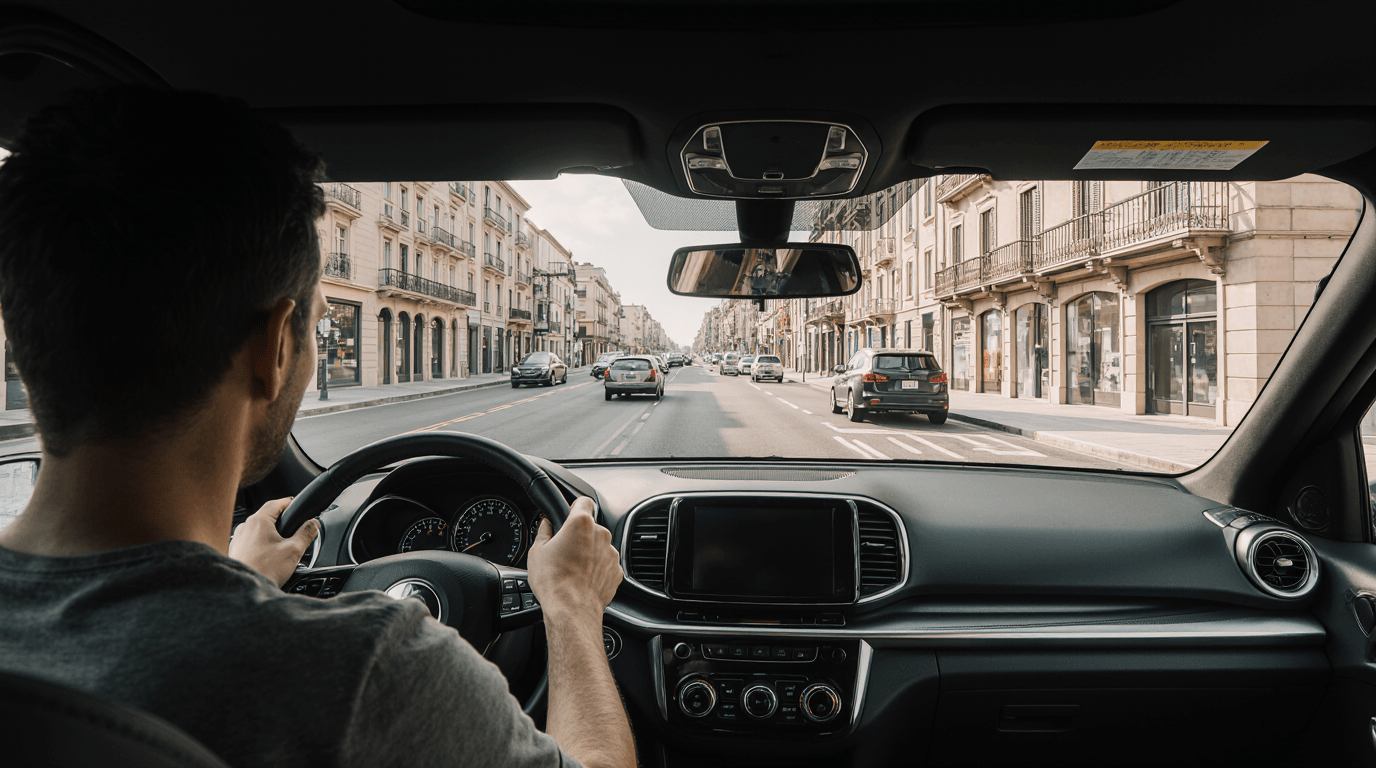
Driving in the city has become a balancing act between traffic, expensive fuel, endless roadworks, restricted zones, and limited time. While it's not always possible to do without a car, it is possible to spend less . We're not talking about miracle tricks, but rather simple decisions that reduce fuel consumption, maintenance, and daily stress.
This guide brings together real practices that thousands of drivers in Spain are currently implementing to make each journey less expensive and more efficient.
Get to know the city to spend less
Urban fuel consumption skyrockets due to sudden braking, abrupt starts, congested streets, and constant changes in pace. Even so, small adjustments can reduce fuel consumption.
Smart routes
Navigation apps have improved, but the best savings come when you combine them with your knowledge of the surroundings.
- Avoid congested arteries during peak hours, even if they are "the fast route".
- Choose streets with few traffic lights and gentle slopes.
- Prioritize wide roads where you can maintain a constant speed.
A route five minutes longer can reduce consumption by 10–20%.
Avoid the saturation band
If the schedule is flexible, shifting a typical route by 20–30 minutes saves fuel , time, and mechanical wear. In cities like Madrid, Barcelona, Seville, or Valencia, the difference between 8:00 and 8:30 is significant.
Smooth driving reduces fuel consumption more than any trick.
Urban driving is where how we treat the car is most noticeable.
Progressive acceleration
Avoiding sudden acceleration and keeping the engine within a stable range easily reduces fuel consumption, especially in gasoline engines. The car uses less fuel when you anticipate the need to accelerate, not when you react.
Brake less, observe more
Looking two cars ahead allows you to anticipate braking, maintain momentum, and avoid unnecessary stops. Every time the car stops, fuel consumption resets to zero.
Stable speed
Between 40 and 50 km/h is where most vehicles perform best in the city. Constant variations in speed cause fuel consumption to rise to surprisingly high levels.
Practical maintenance that avoids unnecessary expenses
We're not talking about major overhauls, but about details that make a difference.
Correct tire pressure
A tire 0.3 bar below pressure increases fuel consumption and wears the rubber out faster.

Checking them once a month is enough. In the city, where turning and braking are constant, the correct pressure prevents a lot of wear.
Clean filters
A dirty air filter makes the engine breathe poorly and consume more fuel. Replacing it is inexpensive and the improvement is noticeable.
Oil in good condition
In urban driving, oil ages faster. An engine with proper lubrication consumes less oil and experiences less stress.
Choose the right place to refuel
In the city, the difference between gas stations can be noticeable.
- Independent stations usually offer lower prices.
- Refueling early in the morning is usually cheaper in many provinces.
- Price tracking apps help you choose the most stable option.
If you fill up your tank once a week, saving 5–8 euros per fill-up adds up to a lot at the end of the month.
Take advantage of technology without complicating your life
You don't need to buy a new car to spend less. The technology available already helps enough.
Start-stop used properly
Automatically shuts off the engine at traffic lights or when stopped in traffic. Use it for extended stops, not for turns or short maneuvers.
Speed control in urban areas
On wide avenues or urban ring roads, maintaining a constant speed prevents sudden changes.
Eco Mode
In many current models, Eco mode softens the accelerator response. In the city, it works better than you might think.
Reduce the car's weight and resistance
Urban mobility penalizes any excess.
- Empty the trunk of heavy items you don't need.
- Remove roof racks or bike carriers when not in use.
- Avoid always carrying a full tank if you don't need to; it's just extra weight.
Every extra 50 kg increases fuel consumption. In the city, where inertia is constantly being broken, this is multiplied.
Air conditioning without wasting
Air conditioning is necessary in summer and winter for defrosting, but it can easily add an extra liter every 100 km.
- Use automatic mode.
- Avoid setting it to maximum when starting.
- Ventilate for a few seconds before turning on the air conditioning.
The idea is not to get hot, but to use it in a balanced way.
Urban alternatives that complement car use
It's not always about giving up driving, but about driving when it's really necessary.
- Park in less crowded areas and complete the stretch on foot.
- Avoid very short journeys where the engine is cold and consumes more fuel.
- Consider carpooling for daily or occasional trips.
These small decisions reduce expenses and wear and tear without sacrificing vehicle comfort.
Personal strategy: how to organize your travel
Economical urban mobility depends not only on the vehicle, but also on how the day is planned.
- Group tasks and errands together to do them in a single trip.
- Prioritize routes that combine easy parking and smooth traffic flow.
- Keep to realistic schedules that avoid the need to "rush" or stop abruptly.
The goal is to reduce unnecessary mileage and unnecessary stress.

Saving money in the city is a combination of habits.
There is no single action that will reduce expenses. Real savings come from combining good driving habits, smart routes, basic maintenance, and practical decisions.
Any driver can apply these guidelines without spending more money or complicating their daily routine. Urban mobility will continue to be a challenge, but driving efficiently makes each journey less expensive, shorter, and more enjoyable.