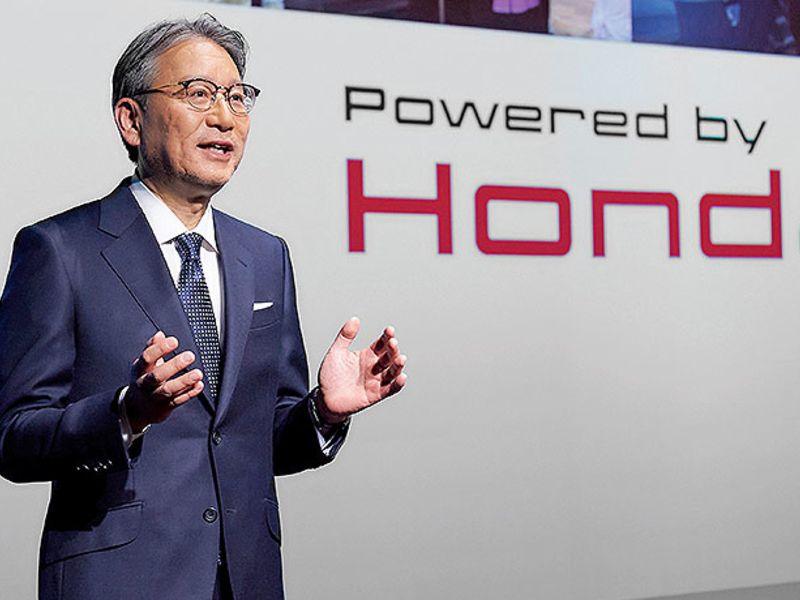
"Honda CEO believes internal combustion engines will remain relevant despite the rise of electric vehicles."
Honda CEO Toshihiro Mibe believes that combustion engines will remain the primary form of propulsion in many vehicles for a long time, despite the growing trend toward electric vehicles. While Honda accelerates its development of electric vehicles, the Japanese automaker remains realistic about the longevity of the internal combustion engine, stating that gasoline-powered vehicles could still be around in 2040. 
During his visit to the Marysville, Ohio, manufacturing facility, Mibe stated that investment in the development of electrification and fuel cells is a priority for the company. However, he expects internal combustion engines to continue to be the preferred choice for high-performance cars, trucks, and other heavy-duty vehicles. He emphasized that, as Honda moves toward carbon neutrality, it is focusing on electrification and fuel cells as the two main components of future mobility.
Mibe's comments reflect Honda's multifaceted approach to achieving carbon neutrality by 2050. This approach involves using combustion vehicles in markets where they make business and regulatory sense, while also focusing on electric vehicles, hybrids, e-fuels, and hydrogen for the rest of its portfolio. Honda and Acura will introduce two new electric vehicles next year, the Prologue and the ZDX, both produced at GM's Springfield, Tennessee, assembly plant. According to Reuters, Mibe also confirmed that Honda is preparing its own electric vehicle architectures, separate from its partnership with GM, and that they should be available by 2026.
Honda's CEO acknowledges that the transition to electric vehicles will take time and that combustion engines will remain relevant for many years. He acknowledges that his personal feelings about engine development don't always align with what's best for the business. Therefore, Honda is taking a pragmatic approach to the transition to electric vehicles, recognizing that a multifaceted approach that includes both combustion engines and electric vehicles will be required.
In conclusion, Honda's CEO believes that combustion engines will remain relevant for many years to come, even as the industry shifts toward electric vehicles. As Honda accelerates its electric vehicle development, it recognizes that a multifaceted approach is required to achieve carbon neutrality by 2050. This approach involves using combustion vehicles in markets where they make business and regulatory sense, while also focusing on electric vehicles, hybrids, e-fuels, and hydrogen for the rest of its portfolio.