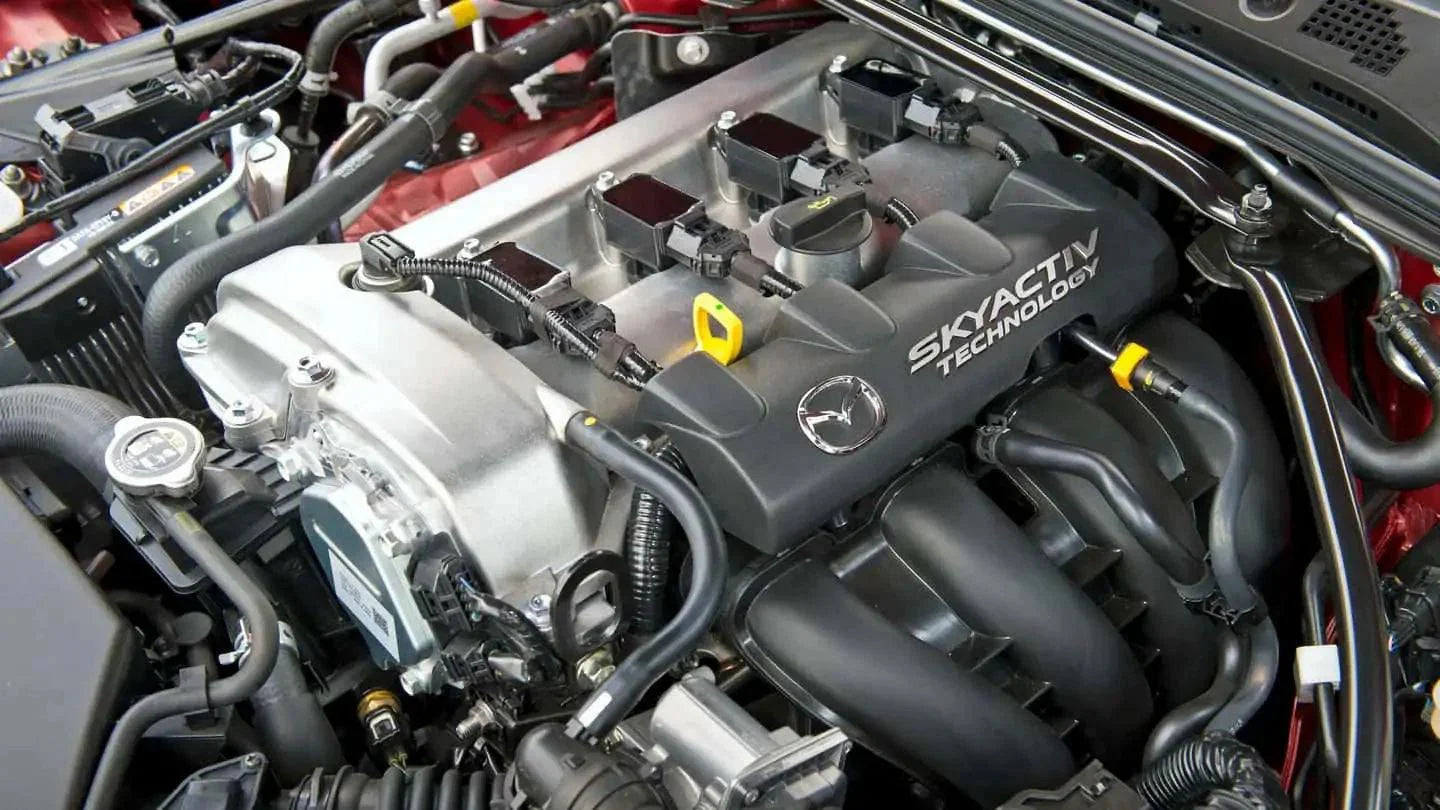
SKYACTIV : Mazda's Revolution in the Age of Motorized Efficiency
The beginning of the SKYACTIV era at Mazda dates back to around 2010. After separating from Ford and regaining its independence, Mazda was undergoing a revitalization phase to consolidate its distinctive brand. However, the economic situation limited investment in all-new engines and platforms.
Therefore, the ambitious SKYACTIV technical initiative was launched. In terms of engines, this project focused on optimizing and updating the previous L-series units, adapting them to be more efficient and environmentally friendly. This effort resulted in the SKYACTIV-G gasoline and SKYACTIV-D diesel engines. For the gasoline engines, direct injection was incorporated, along with a revised exhaust system and an elevated compression ratio, from 11:1 to 14:1, to optimize combustion. For the diesel engines, the ratio was adjusted from 16.5-17:1 to around 14:1.
The program also included improvements to the intake and exhaust systems, a redesigned piston design, and multi-hole injectors. These engines were built entirely from aluminum, equipped with dual overhead camshafts and variable valve timing (VVT), but without turbocharging.