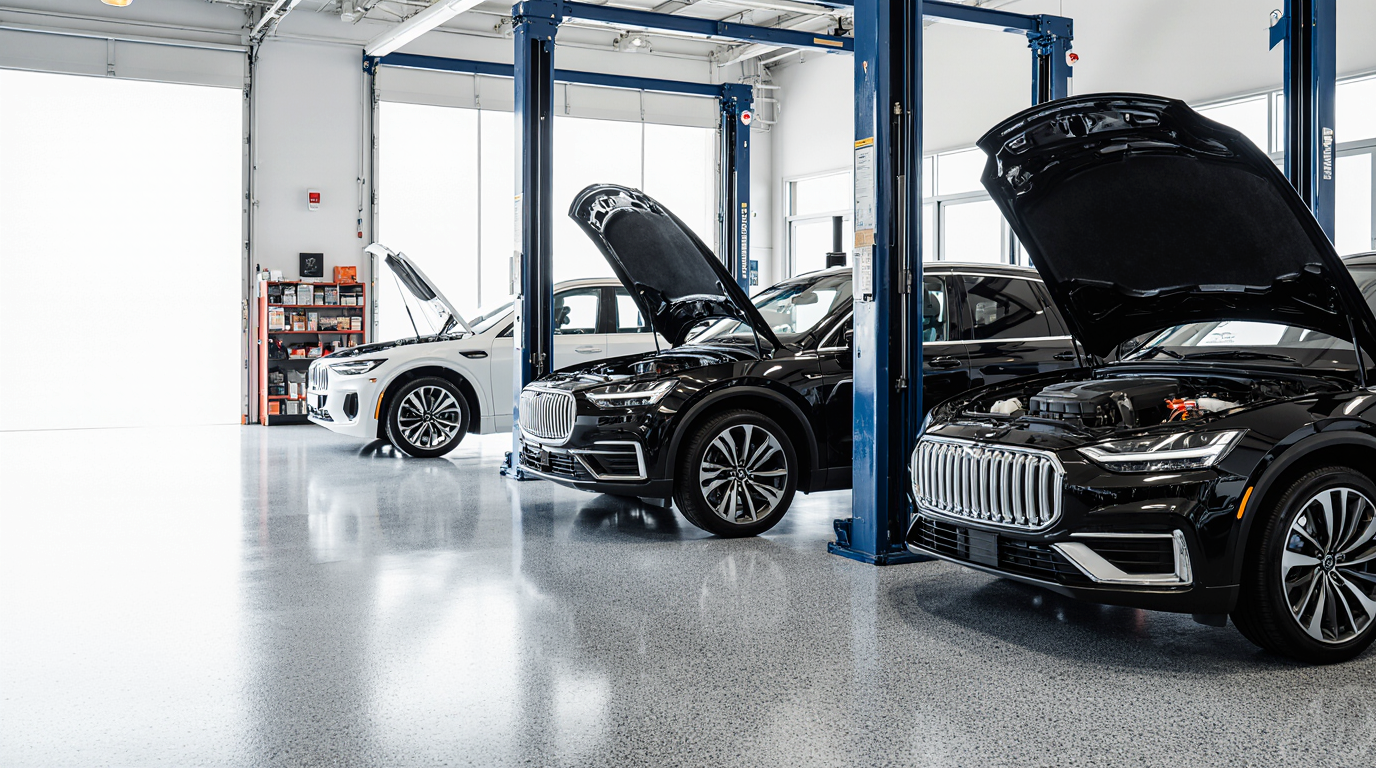
Car maintenance is no longer just a mechanical matter. The Spanish car fleet continues to age , but at the same time, the number of hybrid and electric cars on the road is growing. This creates a new situation: very different technologies coexist, each with its own distinct maintenance needs .
Starting the year with a well-planned check-up is the easiest way to avoid expensive breakdowns, regardless of the type of engine you have.
This list is designed for the actual car you use every day, not for an ideal scenario.
1. Tires: common to all cars, but more critical in electrified vehicles
Whether your car is diesel, hybrid, or electric, tires remain essential .
But in hybrids and electric vehicles, the extra weight of the batteries accelerates wear and tear.
What to check:
- Drawing depth (legal minimum 1.6 mm; recommended from 3 mm).
- Correct pressure according to usual load.
- DOT Date: After 6 years, the rubber loses effectiveness.
In electric vehicles, worn tires reduce range and increase noise.
2. 12V Battery: The common fault in combustion, hybrid and electric vehicles
Even electric cars rely on an auxiliary 12V battery .
It is one of the most common failures in 2025–2026.
Warning signs:
- Erratic start-up (in thermals).
- Intermittent electronic failures.
- Error messages with no apparent cause.
A dead battery can leave even an electric car stranded.
3. Brake system: less wear and tear, but more often forgotten
In traditional cars, brake pad and disc wear is a common concern due to constant use. In hybrids and electric vehicles, regenerative braking reduces this wear, but another problem arises: lack of use can cause damage due to inactivity.
Check:
- Disc condition : In traditional systems, look for excessive wear; in hybrid/electric systems, look for corrosion due to infrequent use.
- Seized brake pads : More common in vehicles with regenerative braking due to lower mechanical friction.
- Brake fluid : In all cases, it absorbs moisture over time and loses its properties.
Both excessive use and lack of activity deteriorate the braking system.
4. Oil and filters (only if your car needs them)
Traditional cars (gasoline and diesel) require regular engine oil and filter changes according to the manufacturer's intervals. Hybrids also have internal combustion engines and need the same maintenance, although some owners forget, thinking they "hardly use it." Electric vehicles don't use engine oil, but they do require other maintenance: cabin air filter and, in some cases, transmission or transfer case oil.
Check according to your car type:
- Thermal and hybrid vehicles : Engine oil, oil filter, air filter.
- All : Cabin air filter (gets dirty equally in any car).
- Electrical : Transmission oil if applicable according to manufacturer.
The common mistake with hybrids is assuming they don't need maintenance of the internal combustion engine.
5. Cooling system: also in electric vehicles
In traditional cars, the cooling system protects the internal combustion engine from overheating. In hybrids, it cools both the internal combustion engine and the battery and electronics. In electric vehicles, although there is no combustion engine, the system cools the high-voltage battery, the electric motor, and the power electronics.
Check:
- Coolant levels according to circuit type.
- Warnings or alerts on the dashboard.
- Periodic inspections according to the manufacturer.
A poorly cooled battery loses efficiency, autonomy, and lifespan.
6. Cables, connectors and charging points (plug-in hybrids and electric vehicles)
A vital point in 2026.
Check:
- Charging cable status.
- Clean connectors with no play.
- Correct functioning of the home charger.
A failure here can prevent charging or reduce the charging speed.
7. Lighting and electronic systems
More technology means more critical points.
Check:
- Exterior lights.
- Parking sensors and cameras.
- Basic ADAS systems.
In electric cars, the electronics are especially sensitive to low voltages.
8. Suspension and steering: weight matters
Traditional cars subject their suspension to normal wear and tear from use and mileage. Hybrids and electric vehicles add an extra factor: the additional weight of the batteries, which can exceed 200-300 kg, accelerates the deterioration of these components.
This especially affects:
- Shock absorbers : They work with a higher constant load, reducing their useful life.
- Silentblocks : The rubber parts deform faster due to the additional pressure.
- Steering : Greater stress on pivoting components and ball joints.
Warning signs: excessive bouncing, thumping noises over bumps, or uneven tire wear. These checks are more critical for heavy vehicles.
9. MOT, labels and documentation
Please note:
- Valid vehicle inspection certificate.
- Correct environmental labeling.
- Insurance tailored to the actual value of the car (especially for electric vehicles).
An administrative error also costs money.
10. Review your actual car usage
The fundamental question is:
- Do you make short trips?
- Do you drive mostly in the city?
- Do you charge your car daily or only occasionally?
Maintenance in 2026 must be adapted to the use, not the type of engine.

"Your 2026 car isn't maintained like a 2015 car."
We live with three different technologies , and many drivers still apply outdated criteria to new cars.
While the market is being redefined and changing cars isn't always immediate, maintaining your current vehicle in good condition remains the most sensible decision .
Preventive maintenance remains the best investment. “Booking a general service at the beginning of the year usually costs much less than dealing with a breakdown costing thousands of euros in the middle of the holiday season.”