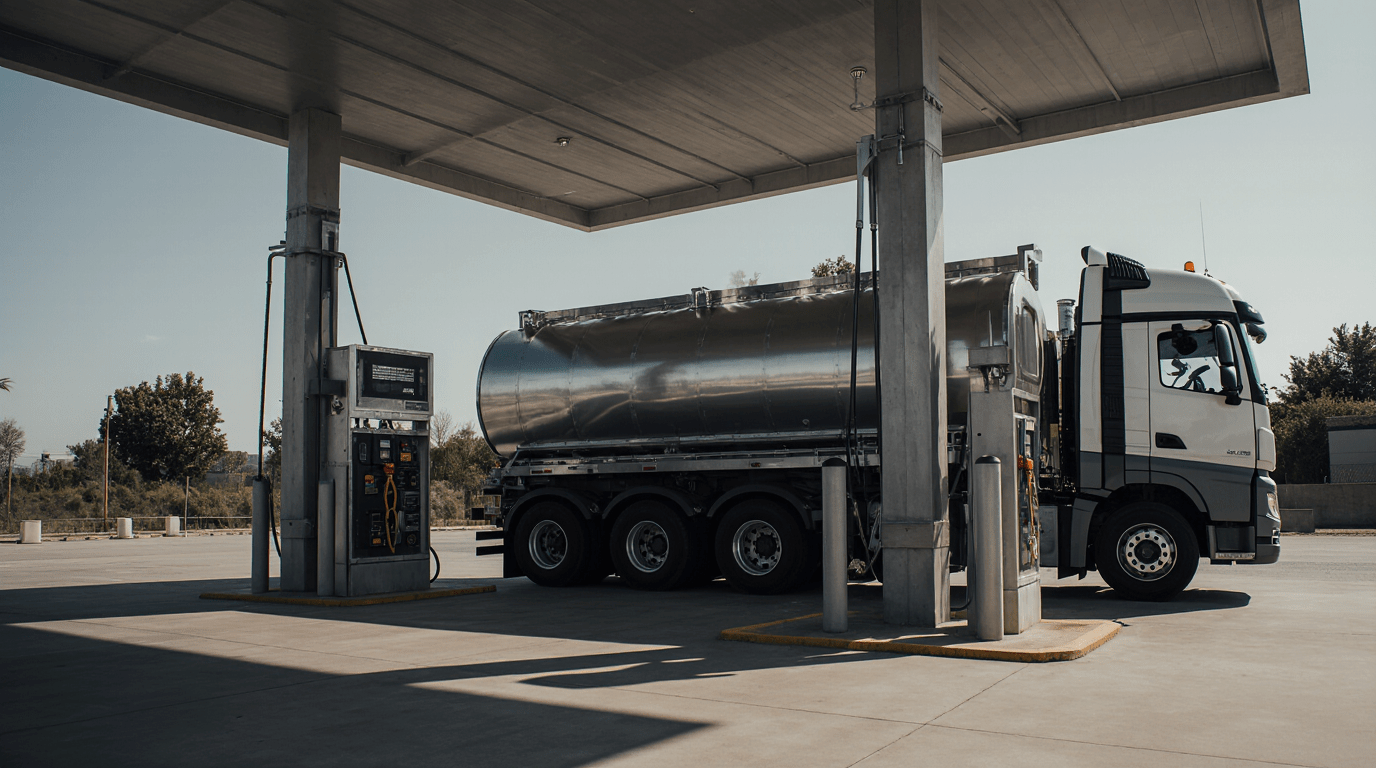
The conversation about sustainable mobility in Spain usually revolves around electric cars. However, while the charging network expands and the industry adjusts its pace, the country is exploring other avenues that could complement or even cover sectors where electrification has clear limitations. Three groups stand out among these: advanced biofuels , HVO , and synthetic fuels or e-fuels . They all share the same goal: to reduce emissions without requiring the complete renewal of the current fleet.
Below is a detailed look at what is being done in Spain, who is driving it, and what real problems are slowing down or accelerating each alternative.
What is an advanced biofuel and why is Spain watching them closely?
Advanced biofuels are produced from waste: used cooking oils, biomass remains, agricultural by-products, or organic fractions that are difficult to valorize by other means.
Unlike first-generation biofuels (e.g., biodiesel from dedicated crops), these do not compete with food use.
In Spain, the interest in them stems from five factors:
- Availability of local waste. The country generates large volumes of used oil and vegetable waste, allowing for a relatively local production chain.
- Compatibility with current vehicles. The practical goal: to reduce CO₂ without forcing millions of cars and trucks to be replaced.
- Refining industry already established. Partial refinery conversion facilitates implementation without starting from scratch.
- Good acceptance in heavy transport. Especially in logistics, city buses and industrial machinery.
- European impetus. Current regulations reserve mandatory quotas for renewables in transport.
They don't solve the problem on their own, but they do help to reduce emissions in sectors that could hardly be electrified in the short term.
HVO: the renewable diesel that is already circulating in Spain
Hydrotreated vegetable oil (HVO) is a specific type of advanced biofuel. Its technical name may sound complex, but its function is simple: to act as a renewable diesel with properties almost identical to fossil diesel.
How it is produced
HVO is obtained by subjecting used vegetable oils or residual fats to a hydrogenation process. The result is a stable fuel with good combustion, capable of blending with or directly replacing conventional diesel ( HVO100 when it is 100% renewable).
What's happening in Spain
In recent years, several initiatives have been launched:
- waste-focused biorefineries to produce HVO on an industrial scale;
- distribution services for professional fleets , especially long-distance transport;
- Dedicated pumps at selected stations that begin dispensing HVO100 for trucks, buses or machinery.
Although not yet widespread among the general public, its growth is steady. Several Spanish companies supply HVO to corporate clients and urban mobility pilot projects.
Why is it of such interest?
The appeal of HVO lies in three points:
- Emission reduction: CO₂ emissions can be significantly reduced when produced from waste.
- Full compatibility: current diesel engines can use it without modifications.
- Realistic application in heavy transport: electrifying a long-distance trailer remains a logistical challenge.
Its limitations
Nothing is perfect. Its main problems:
- Availability of raw materials: the volume of waste is limited and some is imported.
- Higher cost than conventional diesel: its production is still more expensive.
- Scalability: a good option for niche markets, but difficult to turn into the country's mass solution.
Even so, HVO is emerging as the most "ready" renewable technology to use in specific sectors.
Synthetic fuels (e-fuels): the most ambitious and most debated alternative
Synthetic fuels , or e-fuels, are manufactured by combining green hydrogen (generated with renewable electricity) with captured CO₂ . This mixture synthesizes a liquid fuel usable in combustion engines. Their appeal is clear: allowing some internal combustion engines to continue operating without generating net CO₂ .
What is being done in Spain
Spain has one of the most advanced projects in Europe: a pilot plant that produces synthetic fuels using green hydrogen and recycled CO₂ . This facility serves as a laboratory for scalability and cost reduction. Furthermore, research projects are being developed in collaboration with universities and technology centers focused on improving the efficiency of these processes.
Real strength of this technology
E-fuels excel in three areas:
- Theoretical carbon neutrality. Provided that the electricity used is renewable.
- Application in challenging sectors: aviation, maritime transport or classic vehicles.
- Compatibility with existing engines. Can be used in engines that have already been manufactured.
Problems that remain unresolved
Enthusiasm is tempered by several barriers:
- Very high cost per liter. Production is complex and energy-intensive.
- Dependence on abundant renewable electricity. If there are no surpluses, it doesn't make economic sense.
- Low overall efficiency. A lot of energy is needed to produce one liter of fuel.
- Limited to niche markets. Mass adoption would be prohibitively expensive for the user.
For now, its role is geared more towards sectors that have no clear alternative, aviation and maritime transport, than towards the road car.
Spain's position in this energy puzzle
Spain has found its own space in this transition for several reasons:
Expanding renewable capacity
The country continues to expand its solar and wind power capacity, which in the medium term can help generate the hydrogen needed for future e-fuels or to sustain the production of advanced biofuels.
Refinery conversion
Several refineries are adapting parts of their infrastructure to produce renewable fuels. This speeds up the process and reduces investment compared to building facilities from scratch.
Circular economy
Using waste as raw material improves the sustainability of the process and generates local value.
Quotas and regulation
European regulations mandate the inclusion of a certain percentage of renewable fuels in transportation. This is pushing Spanish companies to innovate in order to remain competitive.
Public-private collaboration
Pilot projects, demonstration plants and R&D support have formed a rapidly evolving ecosystem.
Can these alternatives replace the electric car?
The direct answer is no . They are not substitutes for electrification, but rather a complement. Each option has a different role:
- Electric: ideal for private cars, urban use, light fleets.
- HVO: useful in trucks, buses or machinery where changing the entire fleet would be unfeasible.
- Advanced biofuels: rapid transition for professional sectors.
- E-fuels: niches where electrification is almost impossible.
Trying to place them all at the same level of application creates false expectations. The realistic approach is to analyze where each one adds the most value.
Where they do have a strategic role in Spain
Heavy road transport
HVO offers a direct solution with an immediate impact on emissions.
Aviation
Renewable aviation fuels (SAF), which are partly based on technologies similar to e-fuels, are a priority for Spanish airport infrastructure.
Maritime transport
Electrification is not viable on large ships, so synthetic fuels may be key.
Agricultural and industrial machinery
These are sectors where changing the entire fleet is complex and costly.
Municipal fleets
Garbage collection, urban cleaning, or buses can reduce emissions without assuming recharge times or complex infrastructure.
What's needed for these solutions to truly scale up?
- Greater availability of local waste to avoid external dependence.
- Cost reduction through process improvement and economies of scale.
- Increased renewable energy production to support green hydrogen manufacturing.
- Stable regulation that allows companies to invest without uncertainty.
- End-user participation is key to generating real demand for renewable fuels.

Conclusion
Spain is testing alternatives to electric vehicles that don't aim to replace them, but rather to fill gaps where they are not yet available. Advanced biofuels and HVO are ready for use in specific sectors, while synthetic fuels are progressing more slowly, but have potential in areas where electrification would be impractical.
The three technologies share one key point: none will be the sole solution. Spain's energy future will be built on a combination of electricity, renewable fuels, and efficiency, each in its proper place. What is clear, however, is that the country has already begun exploring these paths with real projects, a prepared industry, and a pragmatic approach: improving what we have while building what's to come.