A journey through the most iconic cars in Spanish cinema: filming curiosities, cultural anecdotes and the importance of their spare parts in the history of the big screen .
Spanish cinema has gifted us with images that stay with us forever: actors we instantly recognize, dialogues we remember by heart, and cars that, almost unintentionally, ended up stealing the show. They weren't just motorized accessories; they are silent chroniclers of a changing Spain, metal and glass witnesses to who we were and who we dreamed of becoming.
Each of these models carries the story of a country in transformation, the pulse of an era reflected both on screens and on the roads. And it's fascinating to discover how the public not only fell in love with the human protagonists, but also with those four-wheeled companions who accompanied them on their adventures.
In this journey through Spanish cinematic memory, we're going to put the pedal to the metal to discover how some cars achieved something that very few actors manage: becoming immortal without uttering a single word.
The Seat 600: a symbol of modernity in black and white
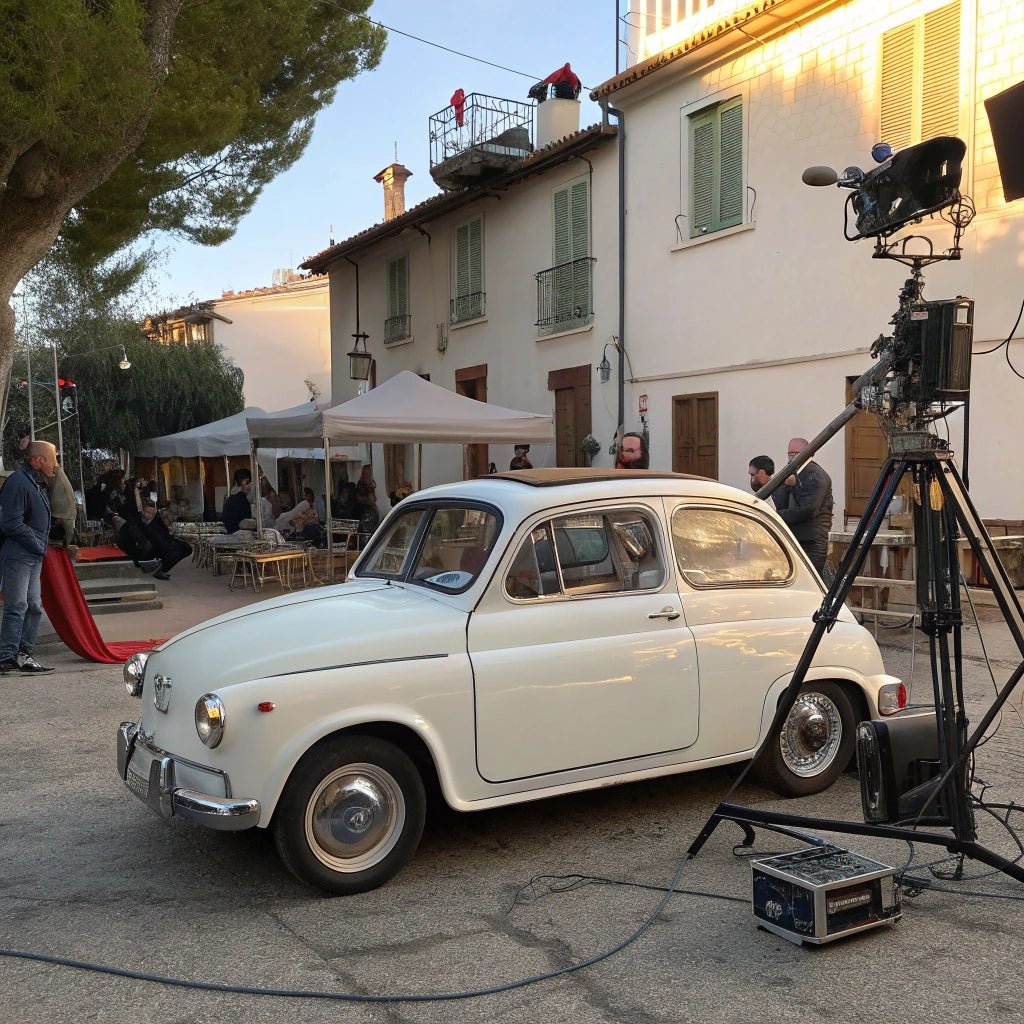
In the 1960s and 70s, the Seat 600 wasn't just a car; it was a symbol of upward social mobility. It appeared constantly in Spanish cinema as a reflection of the lives of the middle class, who were beginning to dream of family vacations and getaways.
Films like *La ciudad no es para mí * (1966) immortalized it as "the people's car." Its simple mechanics, with readily available spare parts, made it an ally both on the road and on set: economical, recognizable, and versatile. Today, fan clubs keep its memory alive, restoring units with original or adapted parts, as if they wanted to preserve the essence of that slice-of-life cinema.
Taxi and the Seat Toledo: the urban hero of the 90s
In the 90s, while Hollywood was releasing Taxi Driver and Ronin , Spain found its own urban hero with Carlos Saura's Taxi (1996). The protagonist, a first-generation Seat Toledo, roamed the streets of Madrid and became an unsettling witness to the film's dark plot.
Beyond the plot, this car represented the modernization of the Spanish taxi fleet at the time. During filming, it's said that technicians had to reinforce the shock absorbers and braking systems to withstand the intensity of the chase scenes. Today, this model is a collector's item, and it's not uncommon to see restored examples with original parts from the manufacturer.
The Peugeot 504 of Los bingueros : humor at the wheel
The softcore and comedic films of the 70s and 80s were often set against the backdrop of robust cars, some imported, that made a statement. The Peugeot 504 , which appears in Los bingueros (1979) starring Esteso and Pajares, was practically a character in its own right.
Its fame stemmed from its durability: a car that could withstand both Spanish roads and the demands of road use. Spare parts for this model, now considered almost collector's items, are sought after by restorers who want to maintain the authenticity of those comedic scenes that made a whole generation laugh.
From the big screen to myth: the Citroën CX in La Estanquera de Vallecas
Eloy de la Iglesia's films reflected the social harshness of the time, and in La estanquera de Vallecas (1987) there is an unexpected protagonist: the Citroën CX . Elegant and futuristic in its design, the car represented a contrast with the harshness of the neighborhood in which the plot unfolded.
This French model, with its revolutionary hydropneumatic suspension, posed a significant technical challenge during filming. Production teams had to be prepared with specific spare parts, as any breakdown could delay shooting. Today, enthusiasts who restore a CX speak of it almost as if it were a work of art.
The Land Rover Santana: from the field to the big screen
It wasn't all city cars. The Land Rover Santana , manufactured in Linares (Jaén), is a classic that has appeared in countless Spanish films and television series set in rural or mountainous areas. Its robustness made it perfect for scenes in difficult terrain, and in cinema it became a symbol of authenticity.
Current restorations keep alive the pride of a vehicle that not only left its mark on the national industry but was also part of that Spain captured in realistic films. Interestingly, many of its original parts are still manufactured in specialized workshops that export to European collectors.
Fun facts and filming tricks
Behind every iconic car in Spanish cinema lies a handful of anecdotes:
- In 80s action movies, it was common to reinforce the chassis with "duplicate" spare parts to withstand impacts that were filmed several times.
- Many of the taxis that appeared on screen were real public service cars rented for filming, which forced the technicians to use temporary spares and return them in their original condition.
- Some cars, like the Seat 124 in police scenes, had sirens and accessories added just for the film, improvised with parts from other models.
A culture in motion

These vehicles are more than just museum pieces or cinematic curiosities. They speak of how Spain lived, dreamed, and saw itself through the screen. Every replacement part, every current restoration, is also an exercise in cultural memory.
Today, when a fan decides to restore a Seat 600 or search for original parts for a Citroën CX, they're not just taking care of a car: they're keeping a part of Spanish cinema alive. A memory that continues to roll, kilometer by kilometer, in the collective imagination.
Spanish cinema not only gave us unforgettable characters, it also taught us to see cars as part of our own stories. After all, who doesn't remember a road scene that, without us even realizing it, connects us to our own journey?