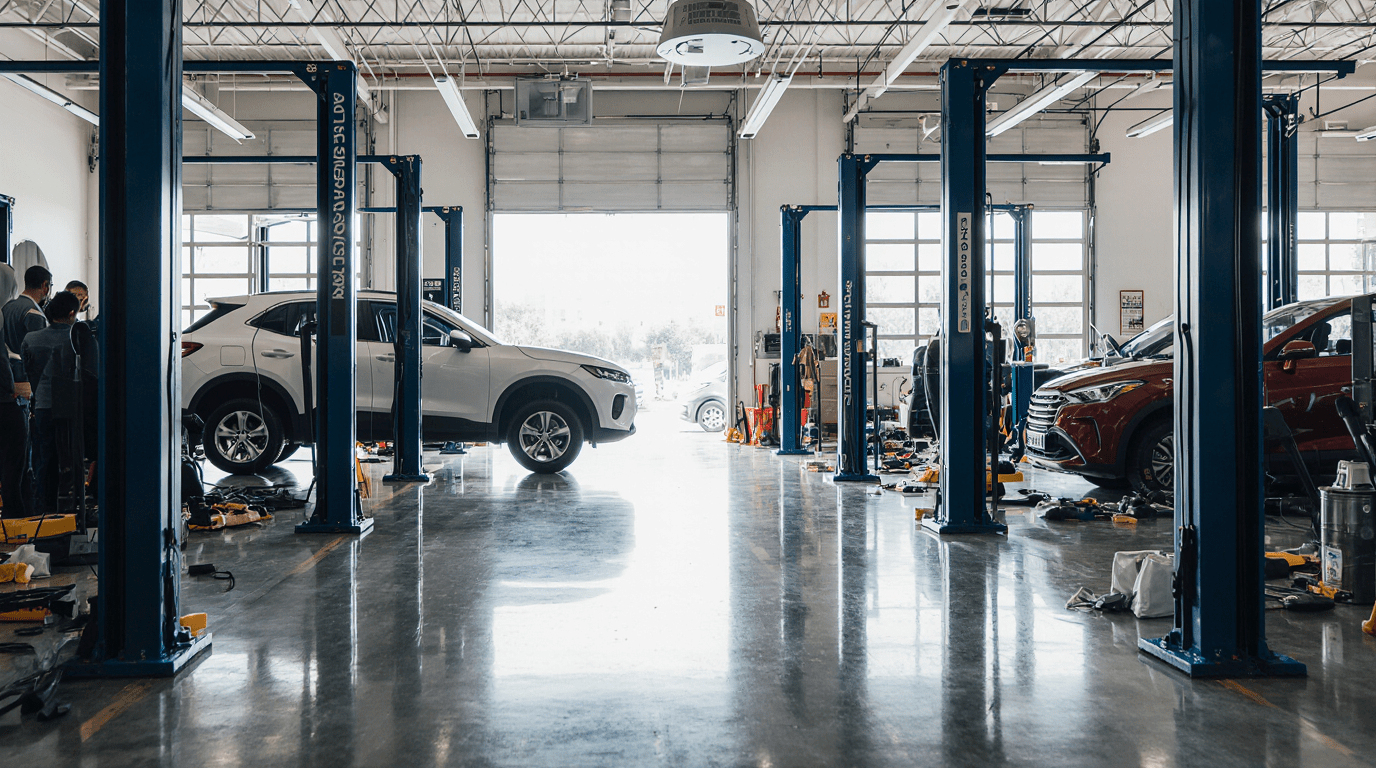
For decades, customizing a car meant adding more: more power, more shine, more new parts. But by 2025, the trend has reversed. Now, the value lies in doing more with less , in reusing, repairing, and adapting. The circular economy is making a strong impact on workshops, driving a form of maintenance and customization that reduces environmental impact without sacrificing style or performance.
The new approach: repair, reuse, reinvent
The circular economy in the automotive industry proposes something simple: extending the lifespan of each part and reducing waste. Instead of manufacturing, using, and discarding, the cycle becomes recovering, reconditioning, and reassembling .
In Spain, according to data from Signus Ecovalor , more than 90% of end-of-life tires are already reused or recycled to manufacture new materials or components, so some companies have been working for years on the remanufacturing and recycling of components from hydraulic systems to interior plastics, demonstrating that sustainability is not at odds with performance.
Circular economy in action: workshops that think differently
More and more workshops are opting for circular solutions:
- Reconditioning parts instead of immediate replacement (such as alternators, pumps or brakes).
- Use of recycled materials for upholstery or interior moldings.
- Restoring electronic components instead of discarding them.
- Certified second-life spare parts , offering guarantee and traceability without the environmental cost of manufacturing new ones.
This type of practice not only reduces costs but also builds customer loyalty among those who value environmental responsibility and durability. “Customers no longer just demand speed; they demand that the car lasts longer and that any changes made make sense.”
Automotive upcycling: when creativity also recycles
Upcycling – reusing materials to create something of equal or greater value – is slowly entering the automotive world.
Some examples that are already visible:
- Upholstered with fabrics recovered from old vehicles or industrial surplus.
- Interior panels made from recycled plastics from scrapped cars.
- Custom accessories made from repurposed metals or carbon fiber.
In the field of automotive design, brands such as Seat and Renault are already experimenting with secondary materials in prototypes and urban models, while Spanish startups are exploring 3D printed parts with a recycled base.
Sustainable spare parts: a real opportunity for workshops and drivers
Talking about sustainability isn't just about image. Remanufactured or reconditioned parts can reduce energy and material costs by up to 60% compared to new ones. Furthermore, European Directive 2000/53/EC requires that at least 95% of a vehicle's weight be reusable or recyclable at the end of its useful life, which is pushing the entire supply chain—manufacturers, workshops, and distributors—to adapt.
For the driver, this translates into clear benefits:
- Lower maintenance costs.
- More durable parts with a warranty.
- Reduction of the vehicle's carbon footprint.
A change of mindset in the Spanish driver
The Spanish market reflects a cultural transformation. Sustainability is no longer seen as a trend, but as a responsibility.
According to a report by Coches.net (2024) , 68% of drivers would be willing to pay more for spare parts or services that reduce environmental impact . And what was once an exception—requesting recycled or reconditioned parts—is becoming the norm.
In this context, workshops that integrate sustainable practices not only gain reputation: they prepare for the future .
A new aesthetic of maintenance
Car tuning pioneered the idea of "personalization." But today, personalization goes beyond style: it also means adapting the car to personal values.
A car that incorporates recycled parts, sustainable materials, and extended maintenance doesn't just look good: it tells a story of respect and awareness .
And that aesthetic of efficiency done well is paving the way for the new automotive culture.

Sustainability as a hallmark of identity
Spain is moving towards a more responsible automotive industry, where personalization and sustainability are intertwined .
Workshops that refurbish, drivers who choose second-hand parts, and manufacturers who redesign with recycled materials are redefining what it means to care for a car.
The next time you think about changing a part, ask yourself:
Can I repair instead of replacing?
Can I customize without generating more waste?
Perhaps that's where the true evolution of the modern automobile lies: in learning that the best innovation can also be circular .